
The Do-Not-Play List: How to Keep Your Wedding Dance Floor Exactly How You Imagined It
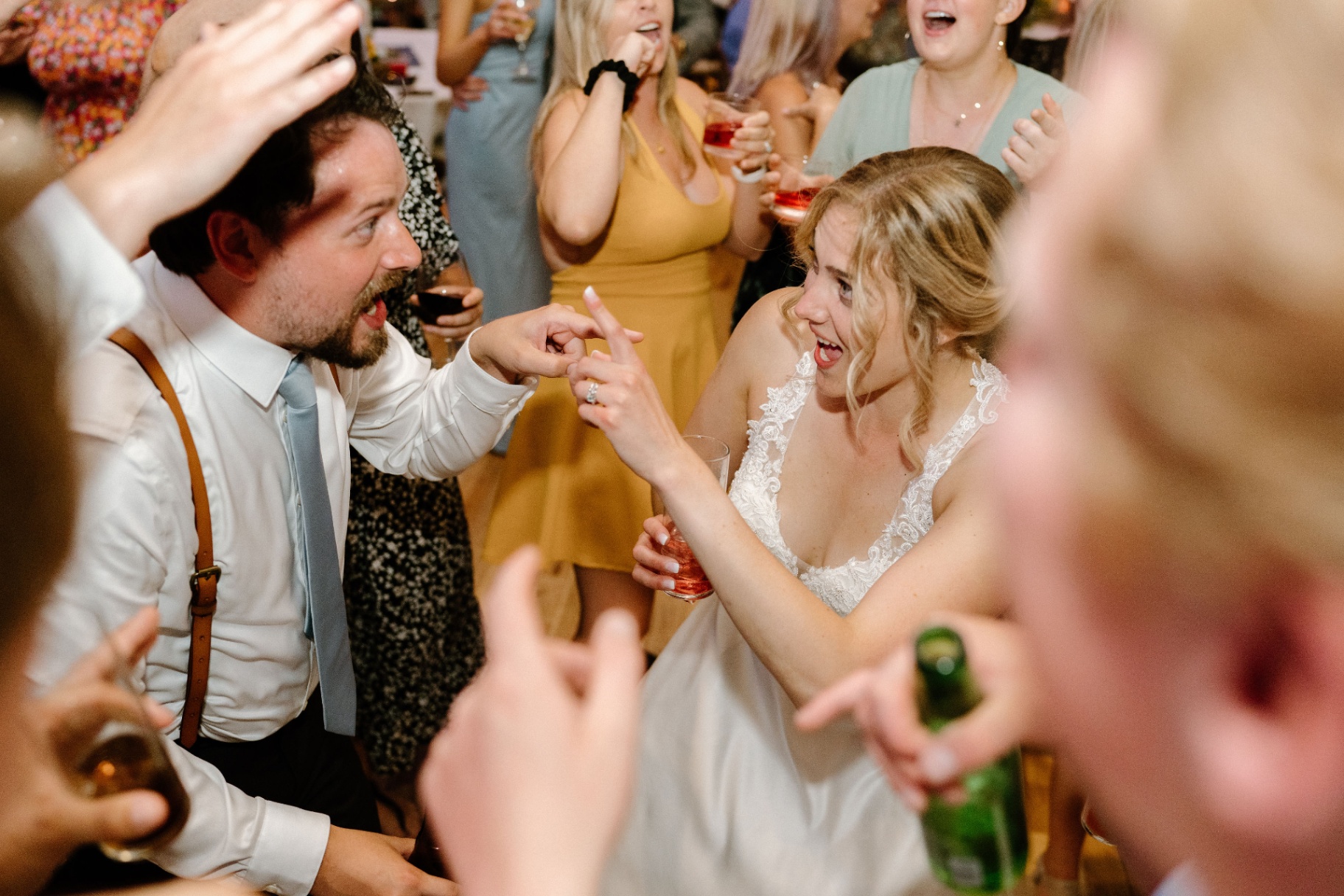
A wedding do-not-play list is a clear set of songs, artists, or music styles you do not want played at your celebration. It gives your DJ practical guidance and helps protect the mood you want for your reception. Pair it with a focused wedding must-play list, share both with your DJ, and leave room for them to read the dance floor and respond to your guests.
That balance is the key: you set the boundaries and spotlight your favorites; your professional DJ shapes the musical journey in real time. With 15–20 must-play songs, a thoughtful do-not-play list, and a plan for requests, you can personalize your wedding DJ playlist without turning the reception into a rigid track-by-track schedule.
What belongs on a wedding do-not-play list?
Include music you genuinely do not want to hear at your wedding. That might mean a song tied to a difficult memory, lyrics that feel inappropriate for your guests, an artist you strongly dislike, or a style of music that does not fit the celebration you envision.
Be as specific as you need to be. If you want to avoid one particular song, name the song and artist. If you want to avoid an entire category (such as explicit versions, line dances, or a certain genre) say so directly. And if a song is off-limits even when a guest requests it, write “do not play, including guest requests.”
Your do-not-play list is not meant to control every transition or predict every crowd favorite. It is there to communicate the boundaries that matter most to you, so your DJ can make confident choices without guessing.
How to build your wedding must-play and do-not-play lists
1. Start with the moments that matter
Before collecting dance-floor songs, identify the music cues that shape the day: ceremony processional, wedding party entrance, first dance, parent dances, cake cutting, and final song. Add the exact song and artist for each moment, along with any version notes.
For example, specify whether you want the original recording, an acoustic version, a clean edit, or a particular remix. If the song should start at a certain point or fade out early, tell your DJ ahead of time. These details help keep important moments personal and seamless.
2. Choose 15–20 must-play songs
For the open dance portion of your reception, 15–20 must-plays is a useful target. Include the songs you would be disappointed not to hear, not every track you like. A shorter list gives your DJ more flexibility to respond to the room, adjust the energy, and keep the music flowing.
As you add songs, ask yourselves:
- Would we want to dance when this song comes on?
- Does it fit the mood and mix of guests we expect?
- Is it essential, or would we simply enjoy hearing it if the moment feels right?
Put the true essentials on your must-play list. Add other favorites to a “play if it fits” list, where your DJ can draw from them when the timing and dance-floor energy make sense.
3. Make the do-not-play list clear and concise
You do not need to explain every choice, but a short note can help your DJ understand an unusual restriction. Separate individual songs from broader preferences, and flag any rule that is absolute.
A useful format looks like this:
- Must-play: Song title, artist, when you would like it played, if tied to a specific moment.
- Play if it fits: Songs, artists, genres, or eras you enjoy.
- Do not play: Song title, artist, genre, or other clear restriction.
- Guest requests: Welcome, but filtered through our preferences and the do-not-play list.
Why not script the entire wedding DJ playlist?
A playlist can express your style, but a wedding reception is a live event, not a fixed sequence of songs. Guests respond differently as the evening unfolds. A professional DJ watches who is dancing, how the energy changes, and when a musical shift can bring more people onto the floor.
That is why a focused must-play list works better than trying to choose every song in advance. Your DJ can honor your favorites while adapting the pacing, transitions, and mix of music to the actual crowd. If a favorite song is less suited to dancing, your DJ can look for the right moment rather than forcing it into a set where it may interrupt the flow.
JAMMIN’ DJs provides online wedding planning tools to help couples organize must-play and do-not-play songs, special moments, and reception details. The planning process gives your DJ a clearer picture of your musical style before the celebration, and leaves room for expert crowd-reading on the night.

How should your DJ handle guest requests?
Guest requests can add a personal touch, but they should not override your preferences. Tell your DJ whether requests are welcome, and make clear that your do-not-play list still applies. A guest’s enthusiasm is not permission to play a song you have ruled out.
Some couples also use QR song requests so guests can submit suggestions from their phones. Treat these as requests for your DJ to review, not as an automatic playlist. Your DJ can consider whether a song fits the moment, your music preferences, and the direction of the dance floor. They can acknowledge a request, save it for later, or decline it when it conflicts with your instructions.
At JAMMIN’ DJs, professional DJs take requests while using their experience to keep the celebration aligned with your vision. A request is one input, not a command to interrupt a special moment or derail the music.

When should you finalize your music?
Aim to finalize your music two to three weeks before the wedding. That gives you time to check song titles, artists, versions, clean edits, and key cues, and gives your DJ time to review the plan before the day. If you are still deciding on a few optional songs, identify them as flexible rather than leaving essential details unclear.
JAMMIN’ DJs reviews planning details with couples and their assigned DJ before the wedding, helping confirm the timeline and special music cues. The company brings more than 15 years of experience and over 15,000 performances to event entertainment, along with Hall of Fame recognition from The Knot. You can learn more about its awards and accolades and read client testimonials.
Planning also includes preparing for the unexpected. JAMMIN’ DJs maintains backup equipment and contingency plans so that technical issues have a response plan, not a place on your dance floor. That preparation supports the smooth transitions and dependable sound your celebration deserves.
For more inspiration as you shape your music, explore The Knot’s wedding reception music advice.
A simple final checklist
Before you share your wedding DJ playlist, confirm that you have:
- Listed the must-play songs that are genuinely essential, around 15–20 for dancing.
- Added your absolute do-not-play songs, artists, genres, or other restrictions.
- Specified the exact version or edit for special-moment songs.
- Marked optional favorites as “play if it fits.”
- Told your DJ how to handle guest and QR song requests.
- Shared the final list two to three weeks before the wedding.
Imagine hearing a song that brings your friends together, followed by a smooth transition that fills the floor with guests of every age. Your lists help set the direction; your DJ’s experience helps turn that direction into a captivating celebration.
Ready to plan your reception music with an experienced team? Explore JAMMIN’ DJs wedding entertainment and request a quote for your celebration.
Frequently asked questions
Should we share the do-not-play list with the DJ?
Yes. Share it in your planning materials and review any absolute restrictions with your DJ before the wedding. If a song should never be played, even as a guest request, make that explicit.
What if a guest requests a do-not-play song?
Your DJ should follow your instructions rather than the guest’s request. Ask your DJ to treat the do-not-play list as a firm boundary and to review other requests for fit, timing, and dance-floor energy.
How many songs can we request?
A practical target is 15–20 must-play songs for the dance portion of the reception. You can also share optional favorites, but you do not need to plan every song. Leave room for your DJ to read the crowd and adjust the wedding DJ playlist as the celebration unfolds.