
Wedding Reception Timeline: The Hour-by-Hour Guide Your DJ Wants You to Steal
A practical wedding reception timeline often runs about five hours: one hour for cocktails, followed by four hours for dinner, formalities, dancing, and a send-off. Use this sample schedule as a starting point, then adjust it to your venue’s end time, meal service, traditions, and priorities. Your DJ/MC can help cue the moments, coordinate transitions with your vendors, and keep the celebration moving without making you manage the clock.
Sample wedding reception timeline: 5:00–10:00 p.m.
This example assumes cocktail hour begins at 5:00 p.m. and the reception ends at 10:00 p.m. Shift the start time to match your plans, and leave a little flexibility, dinner service, travel between spaces, and guest participation can affect the flow.
-
5:00–6:00 p.m., Cocktail hour
Guests mingle while the couple takes photos or joins the gathering. The DJ plays relaxed background music at a level that lets people talk. Behind the scenes, the DJ/MC confirms the introduction order, name pronunciations, special-song cues, and microphone setup. Your planner or venue contact can confirm when the room is ready for guests. -
6:00–7:00 p.m., Guest seating, introductions, welcome, and dinner
The MC invites guests into the reception space, then introduces the wedding party and newlyweds to the agreed song. The DJ starts each track on cue and ensures the photographer is in position before the entrance. Once guests are seated, the MC gives a brief welcome and introduces a blessing or opening remarks if planned. Dinner begins when the venue team is ready; the DJ keeps music at a conversational level and checks with the caterer before making the next announcement. -
7:00–8:00 p.m., Dinner, toasts, cake, and formal dances
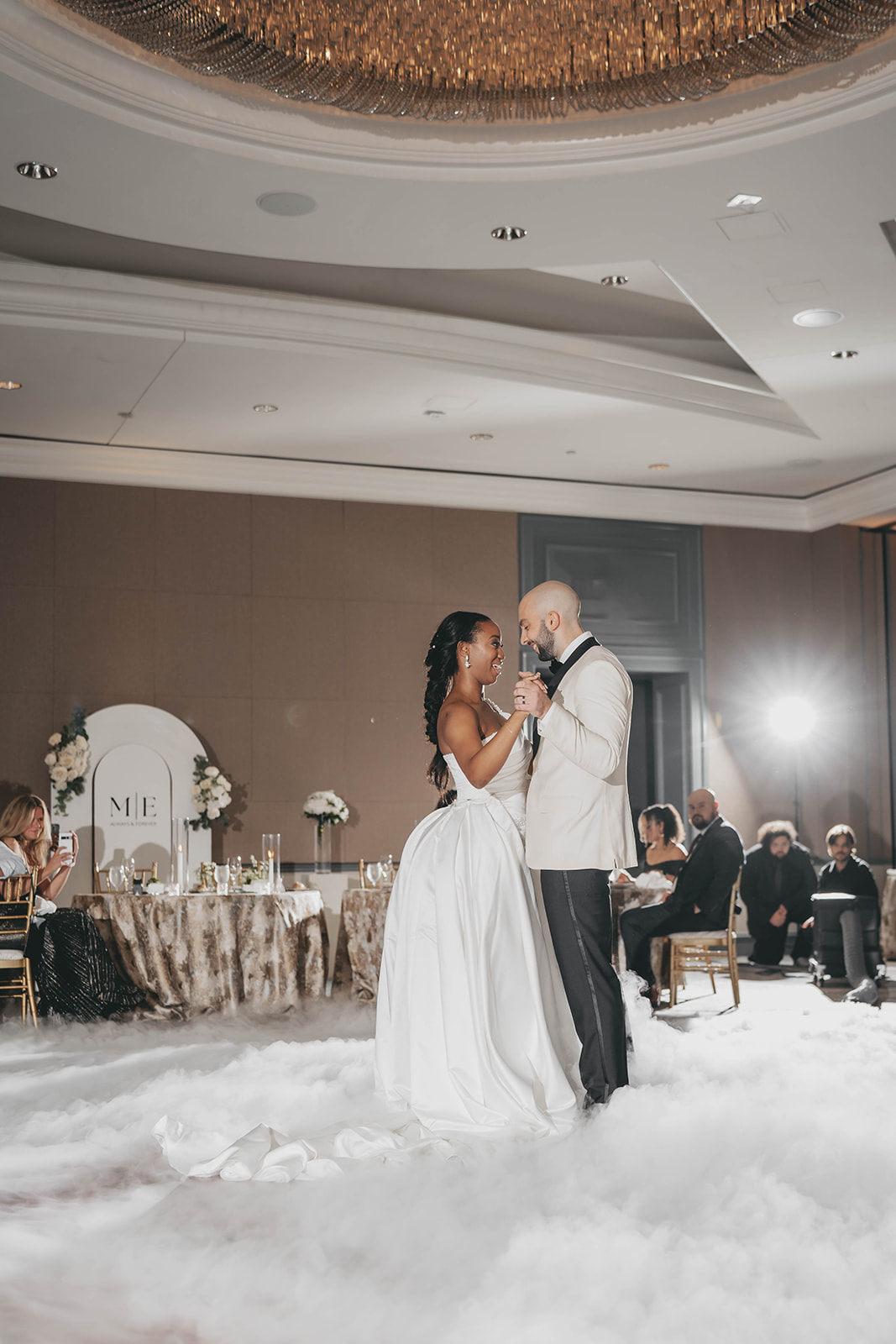
The MC works with the venue team to find a natural point for toasts, often between dinner courses or after plates are cleared. Before each speech, the MC confirms the speaker is ready and gives the photographer a cue. If you’re cutting the cake, schedule it with the venue and photo team rather than announcing it at the last minute. Then the DJ introduces your first dance and any parent dances, playing the selected versions and start points.Want a soft, romantic first-dance reveal? Ask about Dancing on the Clouds, subject to venue approval and setup requirements.
-
8:00–9:00 p.m. Open the dance floor
After formal dances, the MC can invite guests to join you on the dance floor. The DJ shifts from dinner music to an energetic mix that reflects your preferences and reads the room. If you want a dramatic opening effect, ask about CO₂ LED Cryo Guns and confirm venue approval in advance. A wedding DJ and MC team can also help manage requests and transitions while keeping announcements clear and purposeful. -
9:00–10:00 p.m., Keep dancing, announce the last song, and send off
Protect as much uninterrupted dancing as possible. Near the end, the MC announces the final song so guests know the evening is wrapping up. The DJ plays the song you selected, then the MC gives guests simple instructions for your planned exit. Coordinate the send-off with your photographer, venue, and planner, including whether it’s a real departure or a staged photo moment.

Make the wedding reception program fit your celebration
A wedding reception program is a guide, not a rigid script. A buffet may need more service time than a plated dinner, and a larger guest list can make introductions, table releases, or a group photo take longer. Cultural traditions, extra speeches, a late ceremony, and a venue’s sound cutoff can also change the sequence.
Choose the moments that matter most to you, then work backward from the venue’s required end time. Decide which events are essential, how much time each needs, and where you can build in a buffer. If the timeline slips, your DJ/MC and planner can help adjust the order (for example, moving a toast or cake cutting) without asking you to solve logistics during your reception.
A well-prepared Atlanta wedding DJ helps make that plan practical. JAMMIN’ DJs provides online planning tools for music selections and event details, then reviews the plans with you and your assigned DJ before the wedding. The team can coordinate cues with your venue and other vendors, while keeping you informed about important transitions.

Details that help the timeline run smoothly
- Confirm who gives each cue. Your DJ/MC can make announcements and manage music, while your planner or venue captain confirms when dinner, room access, and other venue-dependent moments are ready.
- Share one current timeline. Send the final version to your DJ/MC, planner, venue, caterer, photographer, and videographer. Include the time, location, participants, music cue, and who is responsible for each major moment.
- Give photographers a heads-up. Entrances, toasts, cake cutting, formal dances, and the send-off are easier to capture when the photo team has time to get into position.
- Plan for the unexpected. A trusted entertainment team maintains backup equipment and contingency plans, including options for addressing equipment issues, timing changes, and venue restrictions. Confirm those preparations with your vendors during planning, not during the reception.
- Check effect and sound rules early. Ask the venue about special effects, power, setup access, and music cutoff times. JAMMIN’ DJs offers uplighting and event lighting to help shape the room, with options chosen to suit the venue and your vision.
JAMMIN’ DJs brings more than 15 years of experience and 15,000+ performances to celebrations, along with recognition that includes The Knot Hall of Fame. Explore the company’s awards and accolades and wedding DJ and MC services as you plan your reception.

Wedding reception timeline FAQs
How long should a wedding reception be?
A five-hour reception is a useful planning benchmark when it includes one hour of cocktails and about four hours for dinner, formalities, and dancing. Your ideal length depends on your venue’s rules, meal service, guest count, and the moments you want to include. Confirm the venue’s music cutoff and departure requirements before setting the final schedule.
What time should the last song be?
Schedule the last song so it ends before your venue’s sound cutoff and leaves time for your planned exit. For a reception ending at 10:00 p.m., you might plan the final song around 9:45–9:50 p.m., then allow time for guests to gather and follow send-off instructions. Confirm the exact timing with your venue, DJ/MC, and photographer.
Does the DJ coordinate with the venue and photographer?
A professional DJ/MC can coordinate music cues, announcements, and timeline transitions with your venue and photo team. Share one final run-of-show, confirm who approves each cue, and agree on how schedule changes will be communicated. Your planner or venue captain should remain the point person for venue operations.
Ready to build a reception plan around your songs, traditions, and venue? Request a quote from JAMMIN’ DJs.