
Silent Disco Weddings: The Late-Night After Party Trend Your Venue Will Actually Allow
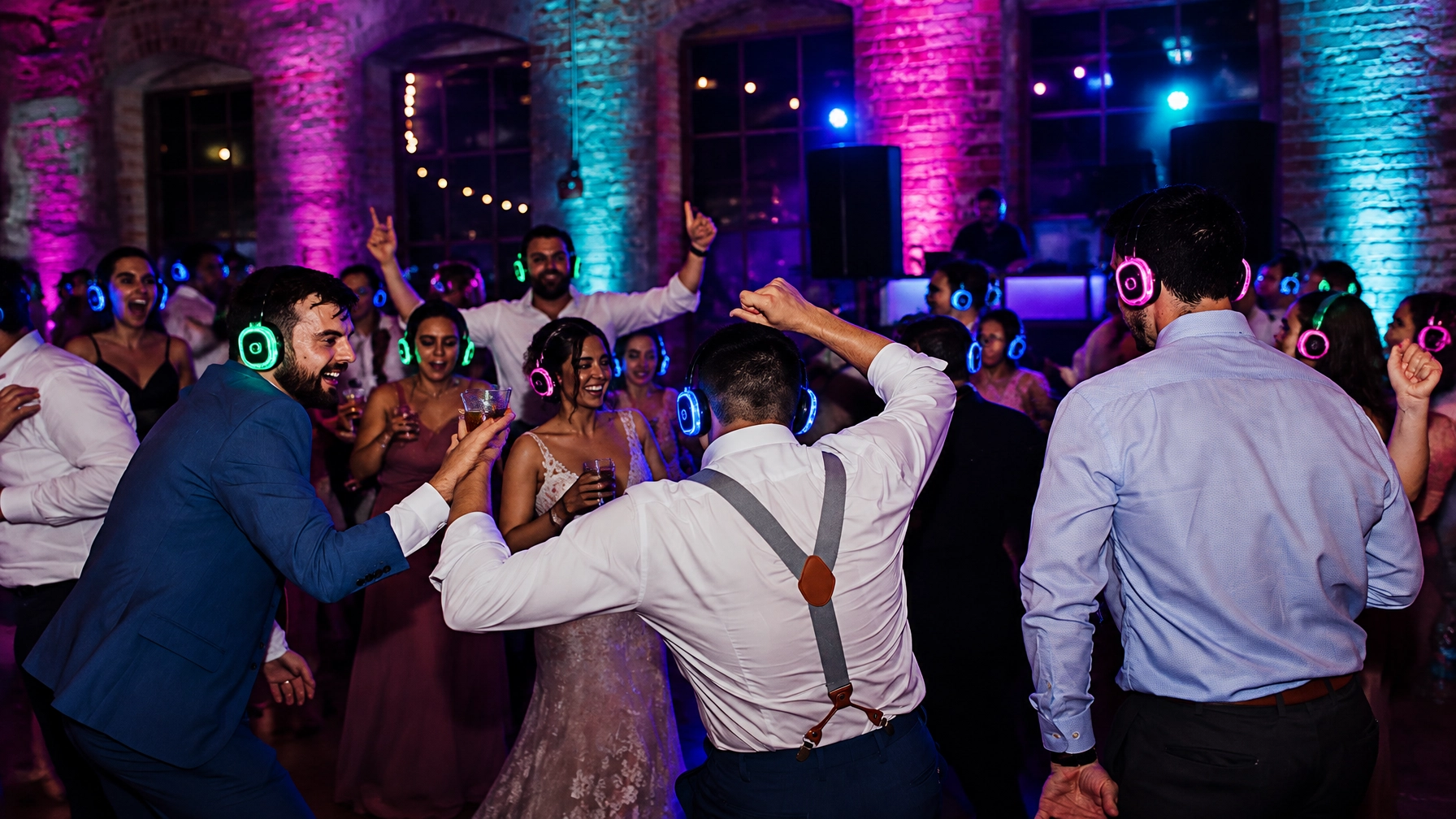
A silent disco wedding uses wireless LED headphones to deliver music directly to guests. With multi-channel headphones, guests can switch between DJs or music styles, while the dance floor avoids the constant amplified sound of a traditional speaker setup. It can be a memorable way to continue a wedding after-party when a venue has sound restrictions, but it does not automatically extend your venue’s curfew or guarantee approval. Always confirm the rules with your venue in advance.
What happens at a silent disco wedding?
Guests receive wireless headphones and choose a music channel using a control on the headset. Depending on the setup, one channel might play current hits, another throwbacks, and a third a different DJ or genre. LED lights on the headphones show which channel each guest is listening to, turning the room into part of the spectacle: guests can sing along to completely different songs just a few feet apart.

At a traditional reception, the DJ sends music through speakers. With a silent disco, the sound is transmitted wirelessly to the headphones instead. That can reduce how much amplified music carries beyond the dance area. It is not completely silent: guests still talk, sing, and move, and some sound can escape from headphones. Your venue’s agreement, closing time, local requirements, and event policies still apply.
For a straightforward overview of how the equipment and channels work, visit our Silent Disco 101 guide.
Why couples add a silent disco to a wedding after-party
A wedding after-party gives your closest friends and family a chance to keep celebrating after dinner, formal dances, and the main reception. A silent disco can make that next chapter feel like a fresh event (with its own music, lighting, and dance-floor energy) without simply repeating the reception.
It’s especially appealing when a venue or nearby neighborhood is sensitive to amplified sound. Since music is delivered through headphones, a silent disco may be a practical option to discuss with your venue when conventional speaker-based dancing has to wind down. The key is to treat it as a planning conversation, not a workaround: the venue must approve the setup, and its departure time and other rules still determine when the event ends.

A multi-channel setup also gives guests a playful way to choose their own soundtrack. One group can dance to pop while another switches to classic sing-alongs. Friends can compare channels, swap headphones, and move between musical moods. That variety can help make a late-night dance floor welcoming to guests with different tastes.
How to plan your silent disco rental
If you’re searching for a silent disco rental in Atlanta, start with the venue and the guest experience, not just the number of headphones. A little coordination makes the switch to wireless entertainment feel smooth and intentional.
- Get venue approval in writing. Ask whether a headphone-based dance party is permitted, especially after the normal amplified-music cutoff. Confirm the latest time guests may remain, any restrictions on DJs or equipment, and whether announcements or a PA system are allowed. Policies vary by venue; for example, Camp Lucy’s event rules describe entertainment approval and sound requirements that event hosts must follow. Check your own venue’s current contract and rules.
- Estimate the headphone count. Base your request on the number of people you expect to join the after-party, rather than automatically ordering one for every wedding invitee. Ask your provider about a reasonable reserve, headset availability, charging, cleaning, and the process for distributing and collecting equipment.
- Choose channels that suit your crowd. A channel plan might include a DJ-led party mix, a throwback playlist, and a different genre. Confirm how many channels the system supports and how they will be managed. JAMMIN’ DJs’ silent disco service can support up to three DJs or transmitters; exact equipment capabilities and event setup should be confirmed during planning.
- Plan the handoff. Decide when the main reception audio ends and when guests pick up headphones. A short announcement, clear check-in point, and brief demonstration help guests understand how to switch channels and adjust volume.
- Coordinate the room and timeline. Work with the venue and your entertainment team on the dance-floor location, equipment placement, setup time, power needs, and guest departure. Also ask how the venue wants you to manage voices and foot traffic outside the dance area.

JAMMIN’ DJs can coordinate the silent disco with professional DJ entertainment and wedding uplighting, so the music, lighting, and timing feel like one cohesive experience. Colorful uplighting can keep the headphones’ glowing LEDs visible and give the after-party its own distinct look.
Does a silent disco replace your wedding DJ?
Not necessarily. A silent disco changes how guests hear the music; it doesn’t automatically replace the person planning the music, reading the room, or guiding the event.
You can use a DJ to mix music for one or more headphone channels, take requests, and manage the transition from the reception. A DJ or MC can also help with announcements and timing, depending on the services you choose and what your venue permits. If you’re comparing formats, JAMMIN’ DJs’ wedding DJ and MC services can be coordinated with the late-night plan.
The right approach depends on your goals. If you want live mixing and an organized transition, ask about a DJ-led setup. If you mainly want guests to choose between prepared playlists, discuss what support is included with your rental. Either way, confirm who handles equipment setup, channel testing, guest instructions, and troubleshooting.
A flexible option beyond weddings
Silent disco headphones can also bring a memorable twist to school events, corporate after-parties, and mitzvahs. Multiple channels can serve different age groups, music preferences, or activity areas, while a headphone-based setup can be useful when a space needs more controlled sound. As with weddings, event organizers should confirm venue requirements and the equipment plan before booking.
JAMMIN’ DJs brings more than 15 years of experience and 15,000+ performances to event entertainment, along with Hall of Fame recognition from The Knot. We also plan for reliability: backup equipment and contingency procedures are part of preparing for an event, so a technical issue has a response plan rather than becoming a last-minute surprise. Ask about the specific backup and on-site support arrangements for your event.
Frequently asked questions
How many headphones do we need?
Plan around your expected after-party attendance and how many guests you think will participate at the same time. You may not need a headset for every wedding guest if some will leave after the reception or choose not to dance. Ask your rental provider to recommend a quantity and reserve based on your headcount, event format, and available equipment.
Does a silent disco replace the DJ?
No, not by itself. Headphones deliver the music, while a DJ can still mix tracks, manage channels, take requests, and help guide the event. You can discuss a DJ-led silent disco or a playlist-based rental, depending on the experience you want.
What venues allow silent discos?
Venue policies vary. Some may consider headphone-based entertainment because music is not played through the usual dance-floor speakers, while others may restrict all entertainment after a certain time or require advance approval. Ask your venue directly, get permission in writing, and confirm the guest departure time. A silent disco does not override a venue’s curfew, contract, or local rules.
Plan your wedding after-party
Picture your guests choosing their own channel, the headphones glowing across the dance floor, and a late-night celebration designed around your venue’s actual requirements. JAMMIN’ DJs can help you explore a silent disco rental in Atlanta and coordinate it with DJ entertainment and uplighting.
Request a quote and tell us your venue, estimated headcount, timeline, and the experience you want to create.